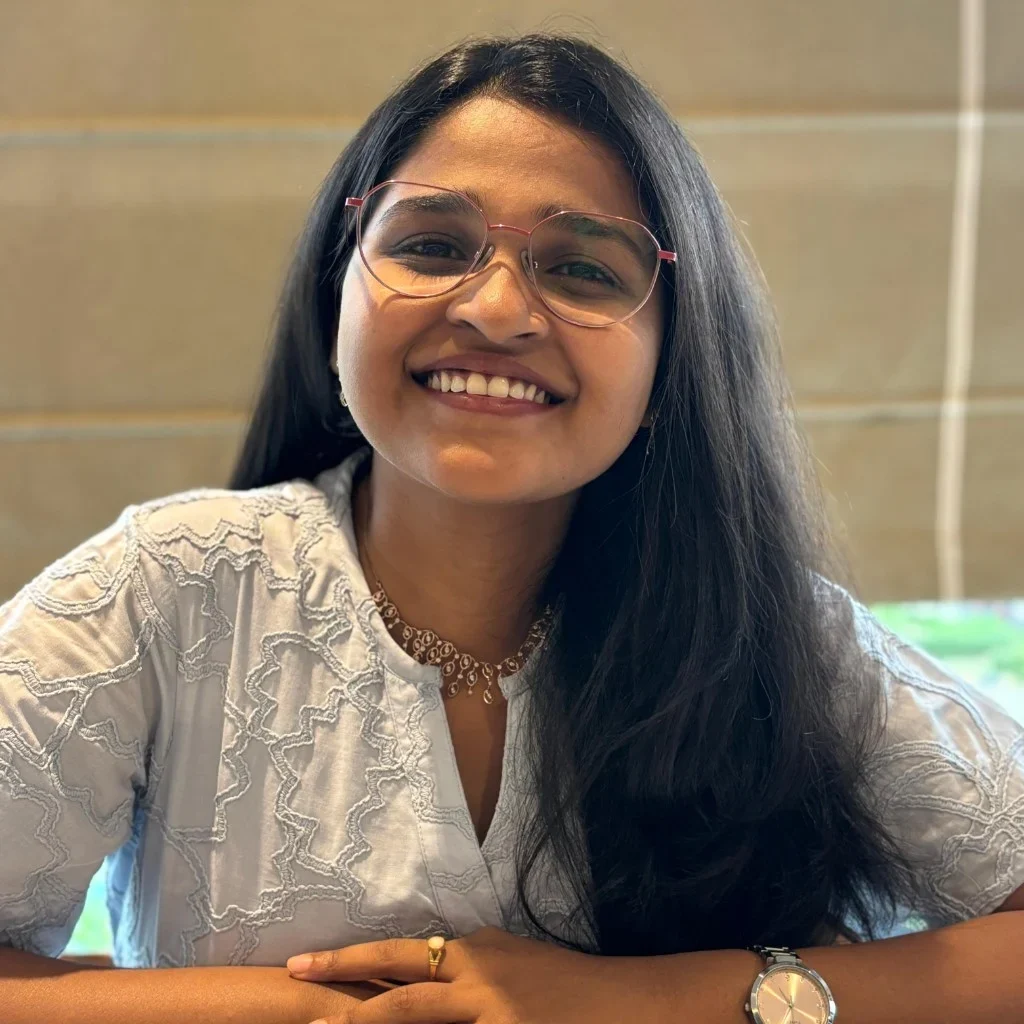
Vineela Upadhyayula

I study how living systems hold themselves together. Scroll, and the same question follows you from a single cell out to the edge of the universe.

Founder and Chief Product Architect, NeuraEase · Emergent Ventures grantee · Hyderabad

10−5 m · A cell

How does something so small become a whole person?

One egg cell becomes a body of trillions, and one day disperses again. It is the first place I see my question: how does structure form, hold and dissolve?

10−1 m · A brain

How much should the brain trust the body?

The brain does not just receive signals. It predicts them, and decides how far to believe what arrives.

100 m · A body

How does a body keep itself steady?

Heartbeat, breath, gut. The body talks to the brain all day, mostly below awareness. This is where most of my research sits.

100 m · Two people

Where does one person's regulation end?

Two nervous systems in a room are rarely independent. Heart rates sync during conversation, and a parent's calm reaches a child.

104 m · A city

Do the same rules hold in a city?

New road networks fascinate me: how they route flow and organise themselves over time. A curiosity for now, not a research claim.

1026 m · The universe

Why is there structure at all?

If the universe runs toward entropy, organised things like us are strange. Given one straight answer, I would ask it what the world is, and what the universe is.

10−5 m

A cell

Every scale on the way out asked the same thing

How does a living system regulate itself, stay intact, and use its full range?

By full range I mean how wide a span of demands a system can handle before it breaks down.

These questions would still matter if NeuraEase closed tomorrow. NeuraEase is one attempt to answer them, not the reason they exist.

What I'm trying to find out, scale by scale

The core question, narrowed until data can answer it. Most of my research sits at the body.

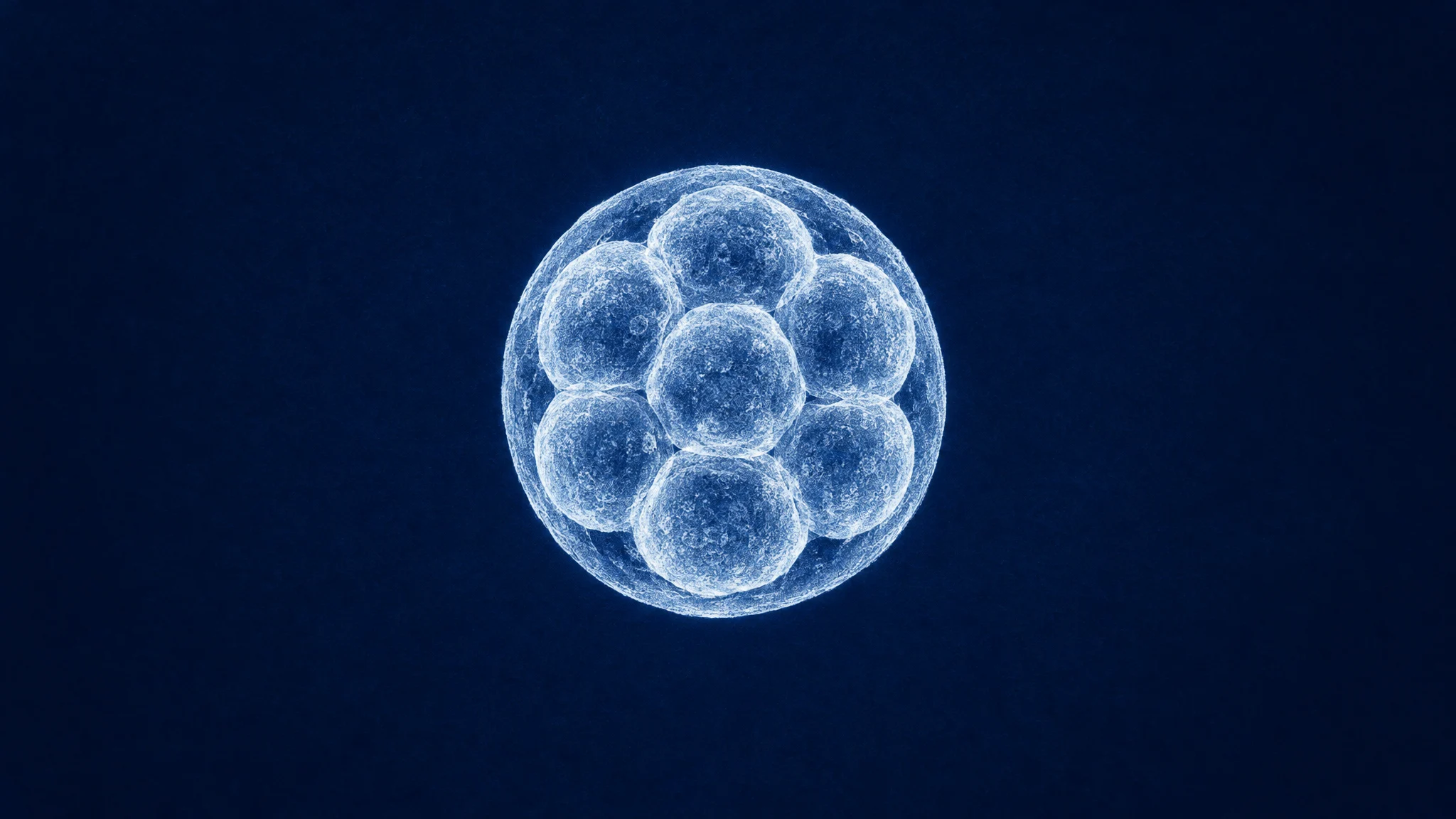
Cyanotype illustration of an eight-cell embryo

10−5 m

A cell

Open questions I keep returning to

  • How does one egg cell become a full human?
  • Where do the instructions carried in DNA come from?
  • How does a body form from dispersed matter, and return to it?
  • What drives living things to spread energy faster than unorganised matter?
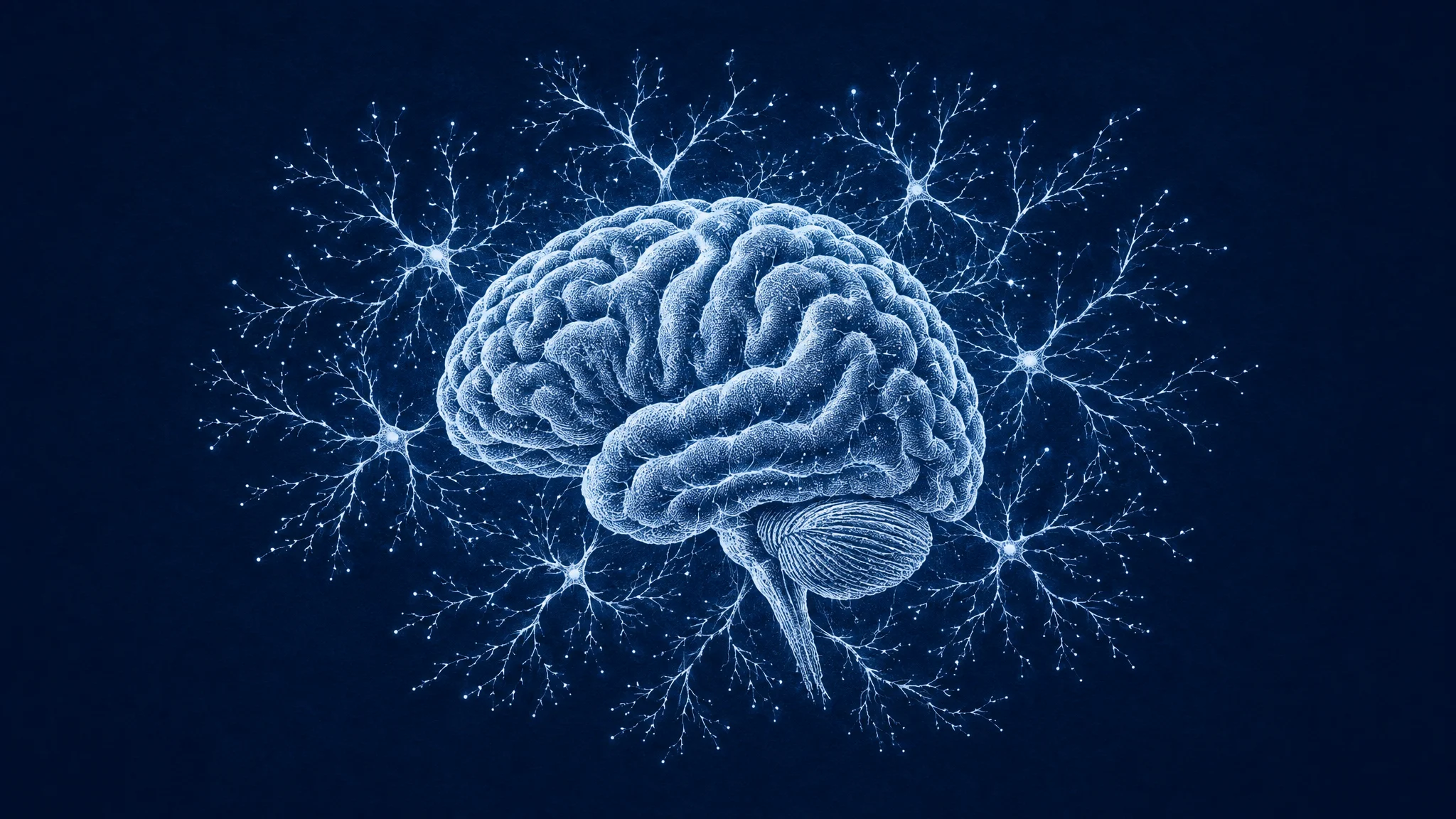
Cyanotype illustration of a brain with branching neurons

10−1 m

A brain

Why do two people with the same heart rate feel different things?

How do individuals differ in how much the brain trusts body signals versus its own predictions?

Framework. Predictive processing and precision-weighting.

Why I care. My position is that distress comes from badly tuned trust in body signals, not from prediction error itself.

Can a person deliberately rebuild how their own regulation works?

Which contemplative and behavioural practices change autonomic regulation, and by what mechanism?

Framework. Measured studies only, such as breathing rate and heart rate variability research.

Why I care. I read Vedic, Sufi and Buddhist traditions for mechanism, and I want to architect how my own mind works.

Open questions I keep returning to

  • What is a thought, at the level of neurons and energy?
  • How does a thought become conscious?
  • Is all human experience the output of a prediction model?
  • Why does the brain simulate detailed outcomes for events that will never happen?

Open in science. Listed, not claimed.

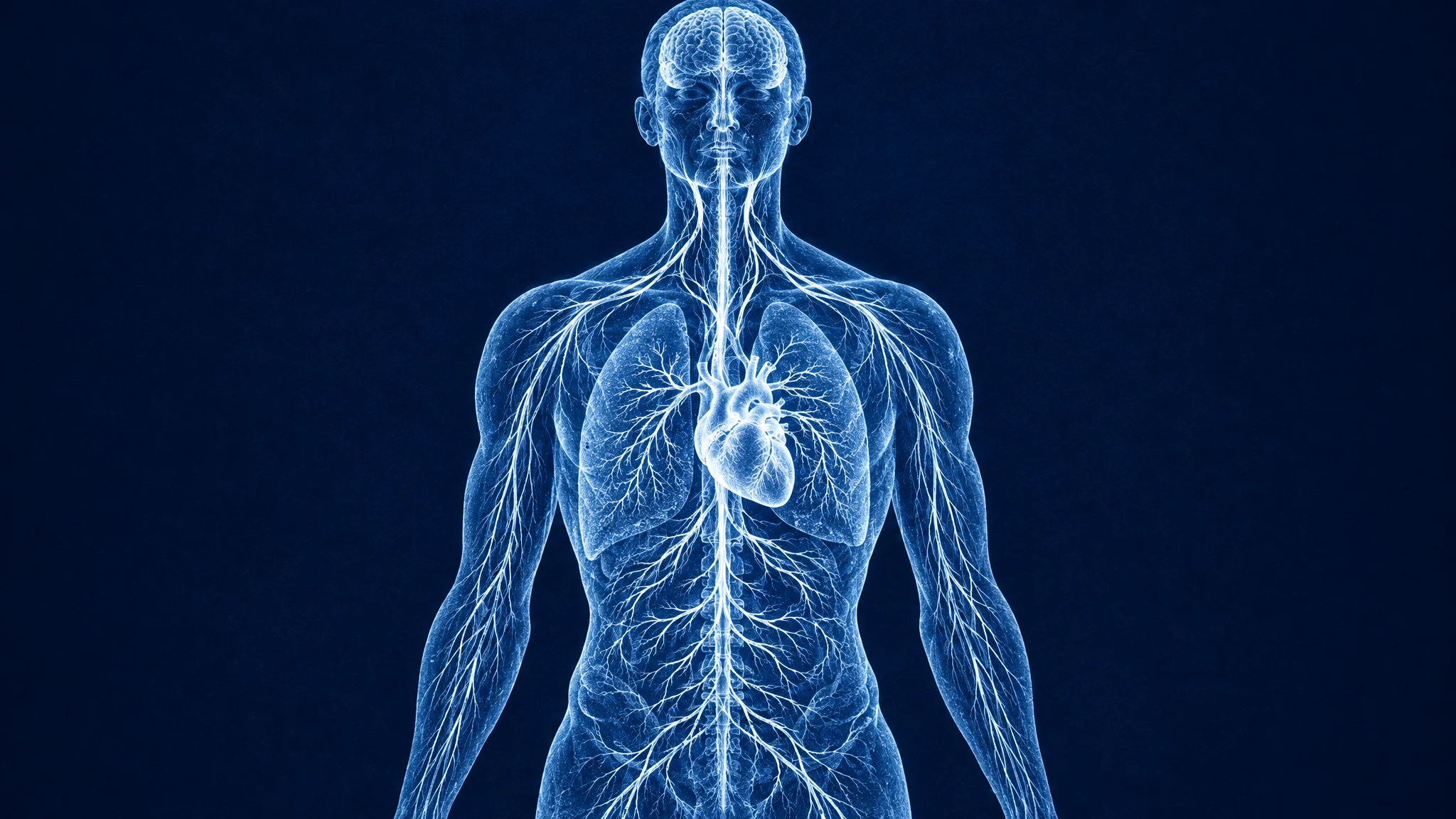
Cyanotype illustration of a torso showing the heart, lungs and vagus nerve

100 m

A body

How much can the body tell the brain?

What is the information capacity of interoceptive channels?

Framework. Shannon information theory: channel capacity, the most information a signal path can carry reliably.

Why I care. Electronics engineering applied to physiology. Few people come at interoception, the sensing of heartbeat, breath and gut, from signal theory.

Does the nervous system regulate by reacting or by anticipating?

What is the relative role of homeostasis and allostasis in daily regulation?

Framework. Homeostasis corrects after a change. Allostasis adjusts ahead of a predicted demand (Sterling).

Why I care. If regulation is mostly anticipatory, support should change the predictions, not only calm the reaction.

Is there a shared body-level signature underneath very different conditions?

Are there transdiagnostic autonomic signatures across autism, ADHD, BPD, OCD and burnout?

Framework. NIMH Research Domain Criteria (RDoC): studying mental health by underlying systems rather than diagnoses.

Why I care. This is the subject of my first paper, on computational signatures in neurodivergent populations.
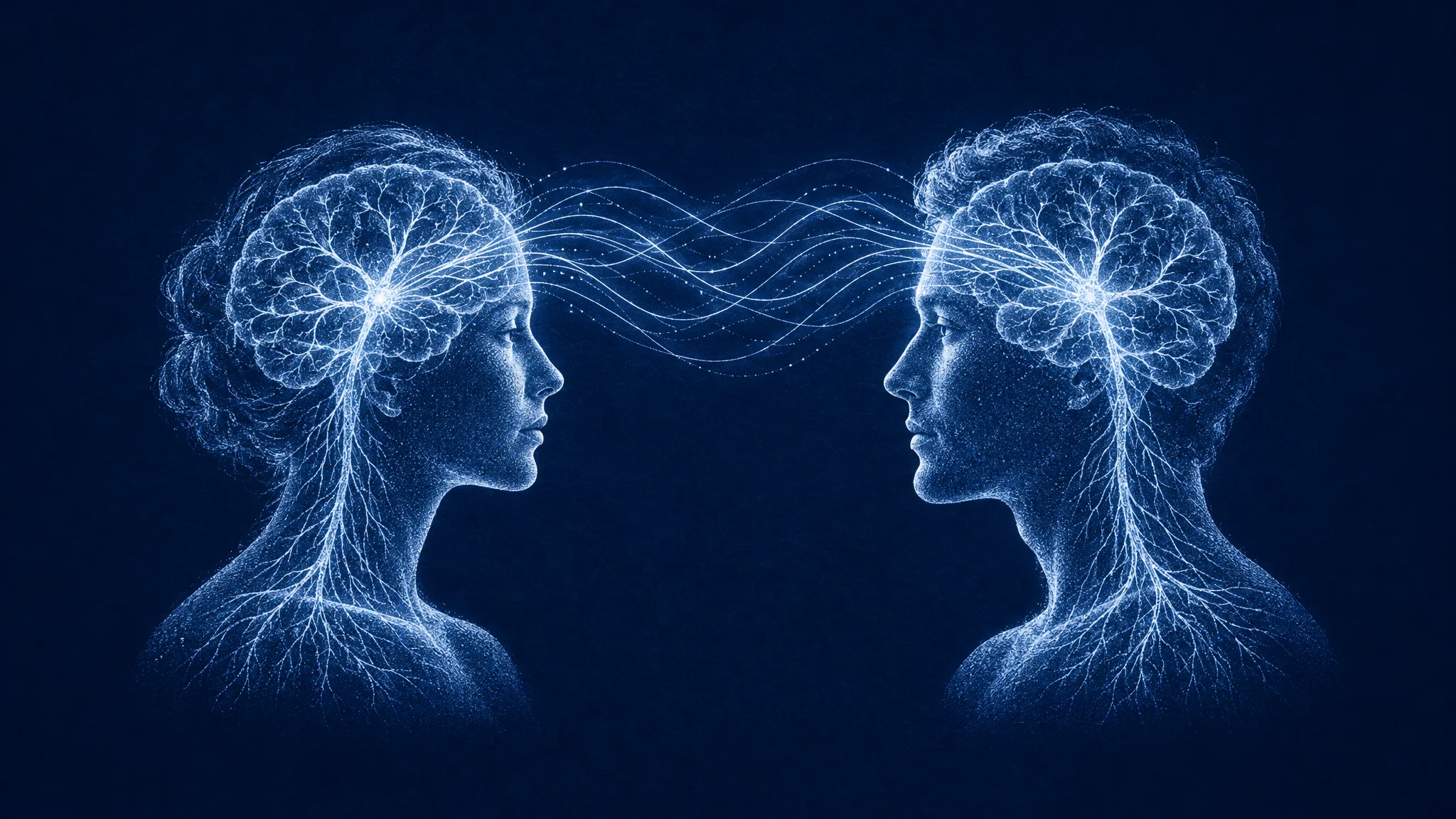
Cyanotype illustration of two profiles facing each other with waves between them

100 m

Two people

Where does one person's regulation end and another's begin?

How do coupled nervous systems influence each other's state?

Framework. Co-regulation: two systems whose activity affects each other, like heart rates that sync during conversation.

Why I care. Parents and children, partners, teams. Most regulation research studies people alone.

Cyanotype illustration of a town's road network seen from above

104 m

A city

Open questions I keep returning to

  • Do the same rules of self-regulation hold in a cell, a body and a city?
Cyanotype illustration of a spiral galaxy

1026 m

The universe

Open questions I keep returning to

  • If the laws of physics ran in reverse, how would they apply?
  • Does information always need a medium, if light can cross a vacuum?
  • What exists that humans cannot perceive?
  • Why is there something rather than nothing?

Open in science. Listed, not claimed.

What I'm building

I learn by building. Theory tends to follow construction for me, so the product came before the papers.

  • NeuraEase

    Founder and Chief Product Architect

    A neurotechnology company that builds tools to improve neurodivergent people's daily lives. I spent a year and a half in R&D before opening it to outside testers. Along the way I built the working platform, a five-state model and an admin dashboard.

    Visit NeuraEase
  • Autonomic Computation

    Framework in development

    A framework that joins the Free Energy Principle, information theory and physiology to describe how a body regulates itself.

  • Computational signatures in neurodivergent populations

    Paper in preparation

    Asks whether autism, ADHD, BPD, OCD and burnout share autonomic signatures underneath their diagnostic labels.

  • Emergent Ventures

    Grantee

    Supported by Emergent Ventures for this work.

    Read the cohort announcement
Portrait of Vineela Upadhyayula

Who I am

An electronics engineer who ended up studying the nervous system, and building for it. I grew up in rural India and now live in Hyderabad.

I learn by building. At NeuraEase that meant a working platform and a model of nervous system states before a single paper. Now I'm writing the theory down, one question at a time.

Ask me what I would build if nobody paid me, and the honest answer is a perfect human, or being. Basically god.

Long horizons

I hold one direction for years. NeuraEase had a year and a half of R&D before anyone outside tested it.

Learning by building

Theory follows construction for me. The working platform came before the papers.

Synthesis across fields

Autonomic Computation joins the Free Energy Principle, information theory and physiology.

Primary sources

I read Friston and Shannon directly, and I check claims against logic and evidence before I repeat them.

Skeptical and open

I use the Free Energy Principle while holding that it is hard to falsify. I read old traditions as systems to test, not as proof.

Changing my mind

I decide, and I un-decide when the data changes.

Outside work

Solitude, nature and making things with my hands. Most of what restores me happens before the day starts.

Painting

Acrylic landscapes with improvised technique.

Strength training

A periodised programme at home, currently in a deadlift block.

Light and space

Arranging rooms and designing warm lighting. Certain light shades and layouts excite me.

Road layouts

New road networks, and how they route flow and organise themselves.

Cosmology

Reading cosmology and the physics of information, for the same regulation question at a larger scale.

Entropy and time

Why time has a direction, and how organised things form while disorder increases.

Information

What information is physically, where it lives, and what it costs to erase a bit.

Consciousness

The hard problem, and what ancient and modern accounts each get right about it.

Contemplative traditions

Vedic, Sufi and Buddhist texts, read for how the practices work in the body rather than what they ask you to believe.

Watching people

Observing how people around me behave, and testing psychology frameworks against what I see.

Portrait of Vineela Upadhyayula

Working on any of these questions?

I'd like to hear from researchers working on interoception, predictive processing and autonomic regulation, and from anyone who sees a flaw in my reasoning.

Working with autistic or ADHD adults clinically? I also want to hear from you.

Not looking for vendor pitches or agency services.